Diet plays a crucial role in the management of gastrointestinal disorders. Eating the right foods promotes smooth digestion, enabling the dieticians’ patients to avoid possible diet-caused complications.
Food intolerance is a major issue among gastro patients. They’re unable to break down certain foods leading to diarrhea, gas, and other complications. When undergoing treatment for a gastrointestinal disorder, working with a dietician is vital, as they can provide advice on what to eat and avoid to support your healing.
In this post, we seek to find out how dieticians can help if you see a gastrointestinal specialist. For instance, research has shown that a low diet of fermentable oligosaccharides, disaccharides, monosaccharides, and polyols (FODMAP) helps improve gastrointestinal symptoms among irritable bowel syndrome (IBS) patients. Continue reading for information.
Registered Dieticians
A registered dietician (RD) is a professional accredited by the Commission on Dietetic Registration (CDR) to practice as a food and nutrition expert. RDs work across different settings, including health care, education, government agencies, research, business and industry, and many others.
A registered dietician has the expertise to address complex issues surrounding food and nutrition, enabling them to help people in disease management and prevention. As part of their role, they interpret complex nutrition research and advise their clients on the right food choices to promote their health. For instance, in providing medical nutrition intervention, they advise patients on the best foods to eat and how to prepare them.
Here is a rundown of what a registered dietician does;
- Assess the nutritional and health needs of their clients
- Advice clients on food and nutrition and healthy eating habits
- Help clients in developing nutrition and meal plans
- Collaborate with health professionals in managing diseases through nutrition
- Monitor nutrition plans and make changes as needed
- Create educational resources about healthy food choices
- Document clients’ progress
Generally, a registered dietician possesses the essential skills to offer custom diet advice to clients based on their specific conditions, preferences, and budget. This means they’re good decision-makers with the ability to solve complex problems. They also possess active listening skills and are socially perceptive, besides other skills that enable them to be effective in their role as nutrition counselors.
How Dieticians Can Help Gastro Patients
As mentioned earlier, diet and nutrition play a crucial role in managing gastrointestinal disorders, such as celiac disease, irritable bowel syndrome, Crohn’s disease, inflammatory bowel disease, and bile acid malabsorption. This is due to the strong correlation between eating habits, symptoms, and disease activity in many digestive disorders. For this reason, the importance of gastro patients seeking dieticians cannot be overemphasized.
Here is a summary of the specific ways in which a dietician can help you;
- Collaborate with your doctors and provide research-backed advice on the right food to eat based on your gastro problem
- Develop a nutrition plan and help you with meal planning taking your preferences into consideration
- Advice you on when and how much to eat
- Counsel and encourage you as you adjust your eating habits, including debunking myths about certain foods
- Document your progress and advice on meal modification if you experience complications with certain foods
The dietician assumes an all-around role in helping you adopt a diet that promotes your health while managing your condition. As such, they may also provide cooking tips and snack ideas and ensure you prepare and consume foods that make you feel good inside out.
Dietary Recommendations After Major Surgeries
Following major surgery, the digestive system is susceptible. Certain foods are highly recommended as they’re easy on the gut and quicken healing.
After the surgery, the less load you put on the digestive system, the faster it recovers. Immediately after the procedure, you may be required to take non-carbonated water, then liquid food for some time.
Essentially, the surgery you have determines the type of food you eat. For instance, if you have bowel surgery, you should take a low-fiber diet. Similarly, if you have diverticulitis, you would be advised against eating nuts and so forth.
Other tips may include:
- Avoiding hot food. The temperature should not exceed 113 degrees
- Eat small food portions at least seven times a day
- Take small bites and chew well to lighten the digestive load of gastric juices
- Drink lots of fluid
- Eat more protein to speed up your recovery
- Avoid foods high in fats and sugar
As earlier said, the dietician will recommend foods based on your condition and type of surgery. Essentially, you require a combination of gut-friendly nutrients, including; antioxidants, carbohydrates, fiber, potassium, magnesium, Vitamin C, and Vitamin K, among others, as advised.
Here is a list of possible recommendations.
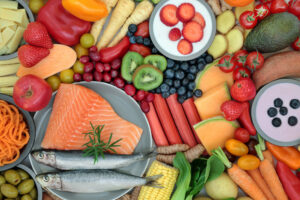
- Foods with antioxidants – Berries (blueberries, strawberries, blackberries), grapes, sweet potatoes, pomegranates, etc.
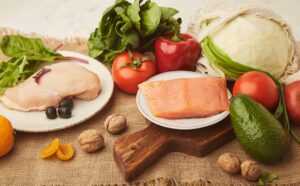
- Protein – Poultry and eggs, seafood, tofu, legumes
- Healthy fats – Almonds, avocados, walnuts, fish oil, coconut oil
- Vegetables – Spinach, broccoli, carrots, cauliflower
- Probiotics – Kefir, yogurt, kimchi, sauerkraut
- Fruits – Apples, berries, apricots, peaches, melon
The dietician will also provide a list of foods you should avoid, including processed and fried foods and alcohol.
How Dieticians Can Help If You’re Seeing a Gastrointestinal Specialist
Working with a dietician during your gastrointestinal treatment is crucial. Food intolerance is common among gastro patients and can impede the treatment’s effectiveness. Seeking a registered dietician is your best move toward ensuring you’re eating the right foods that support your healing.
Among other things, a dietician collaborates with your doctor to advise on the diet based on your gastro problem and preferences. They also help you create a nutritional and meal plan and guide you on when to eat and how much. Besides, the dietician can also provide you with cooking tips and snack ideas and monitor your progress, recommending meal modifications where necessary.